


Climate Resilience Fellowship - Bangladesh
Bangladesh
The Climate Resilience Fellowship empowers young leaders across Bangladesh to design and implement community-led projects, known as “capstone projects”, to address urgent climate issues. By combining climate data and open mapping technologies with local knowledge and people-centered approaches, fellows work directly with communities to reduce climate risks and strengthen climate resilience.
Note: This page is under construction. In the meantime, learn more about the project's outcomes in its case story article.
Climate, a Regional Challenge
Across the Asia-Pacific region, climate impacts are becoming more severe and uneven – affecting informal settlements, frontline communities, and marginalized groups first. Many of these areas lack reliable data, infrastructure, and representation in resilience planning processes.
This includes Dhaka and Chattogram, two of the largest and most populated cities in Bangladesh, where local communities face growing climate risks such as flooding, extreme heat, and water shortages.
Local Youth Leadership to Drive Sustainable, Community-Led Solutions
The Climate Resilience Fellowship (CRF) is a joint initiative by HOT's Open Mapping Hub - Asia-Pacific (AP Hub) and World Vision Bangladesh, funded by NetHope. The program puts local youth at the center of climate resilience work.
CRF goals:
- Build local leadership among youth in climate-affected regions
- Enable fellows to design data-informed, community-driven interventions
- Connect open mapping technologies with local knowledge to drive sustainable climate solutions
- Provide space for experimentation, learning, and scaling of promising approaches
- Increase representation of underrepresented groups through map and data visualizations
In the long term, CRF aims to spark a larger movement for inclusive, localized, and community-led climate resilience across Asia-Pacific.
Why Local Youth?
We believe the best solutions come from those who truly understand the problems.
Fellows were selected from both the climate action and open mapping communities, bridging technical expertise with lived experiences. As youth, they also bring fresh perspectives, creative problem-solving, and strong motivation to shape their communities’ futures.
Most importantly, they are local leaders. They live in or around the communities they serve and understand their challenges firsthand. Through their vision and deep community insight, they created sustainable, impactful, and inclusive solutions that truly address local needs.
Capstone Projects
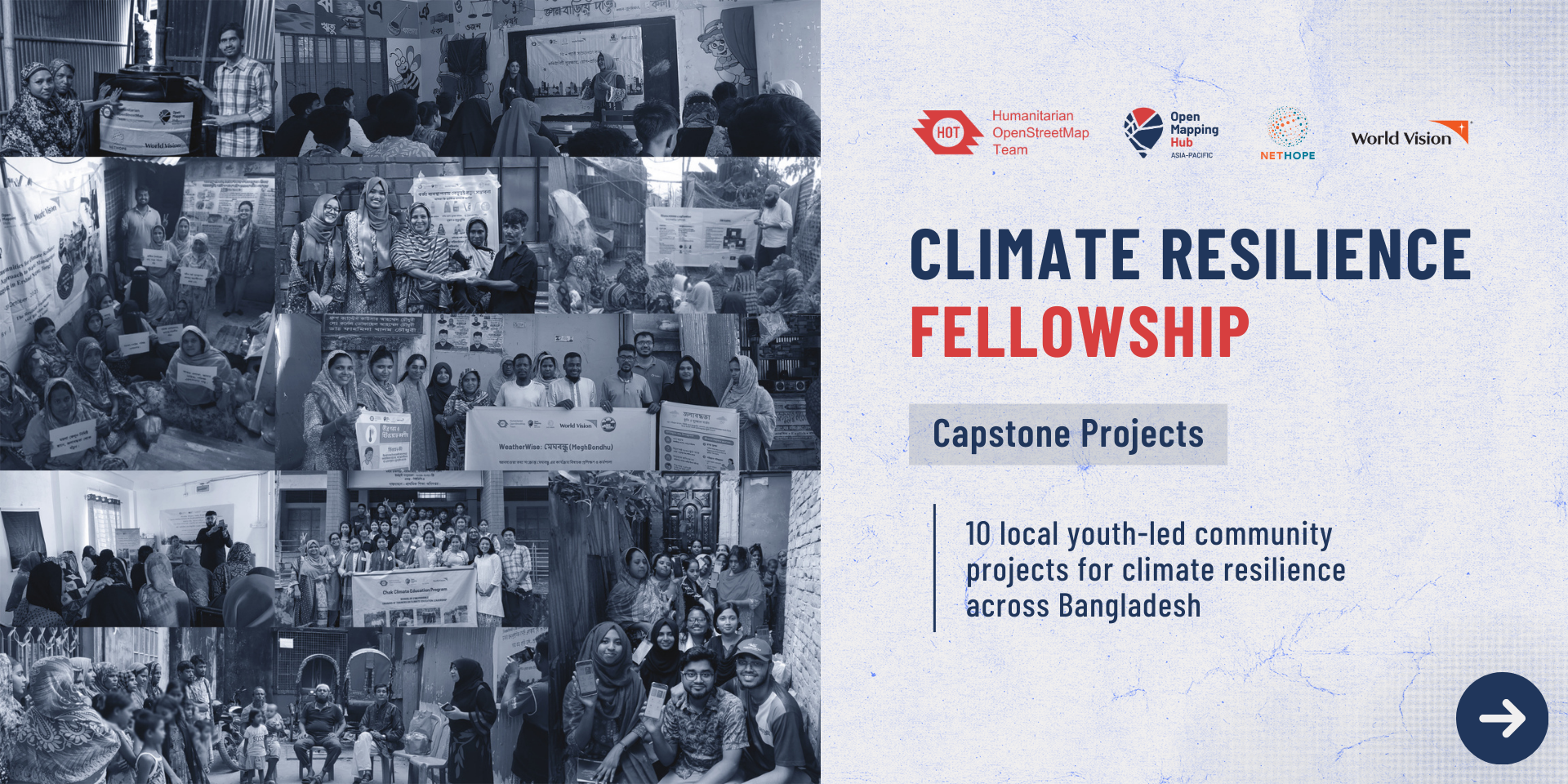
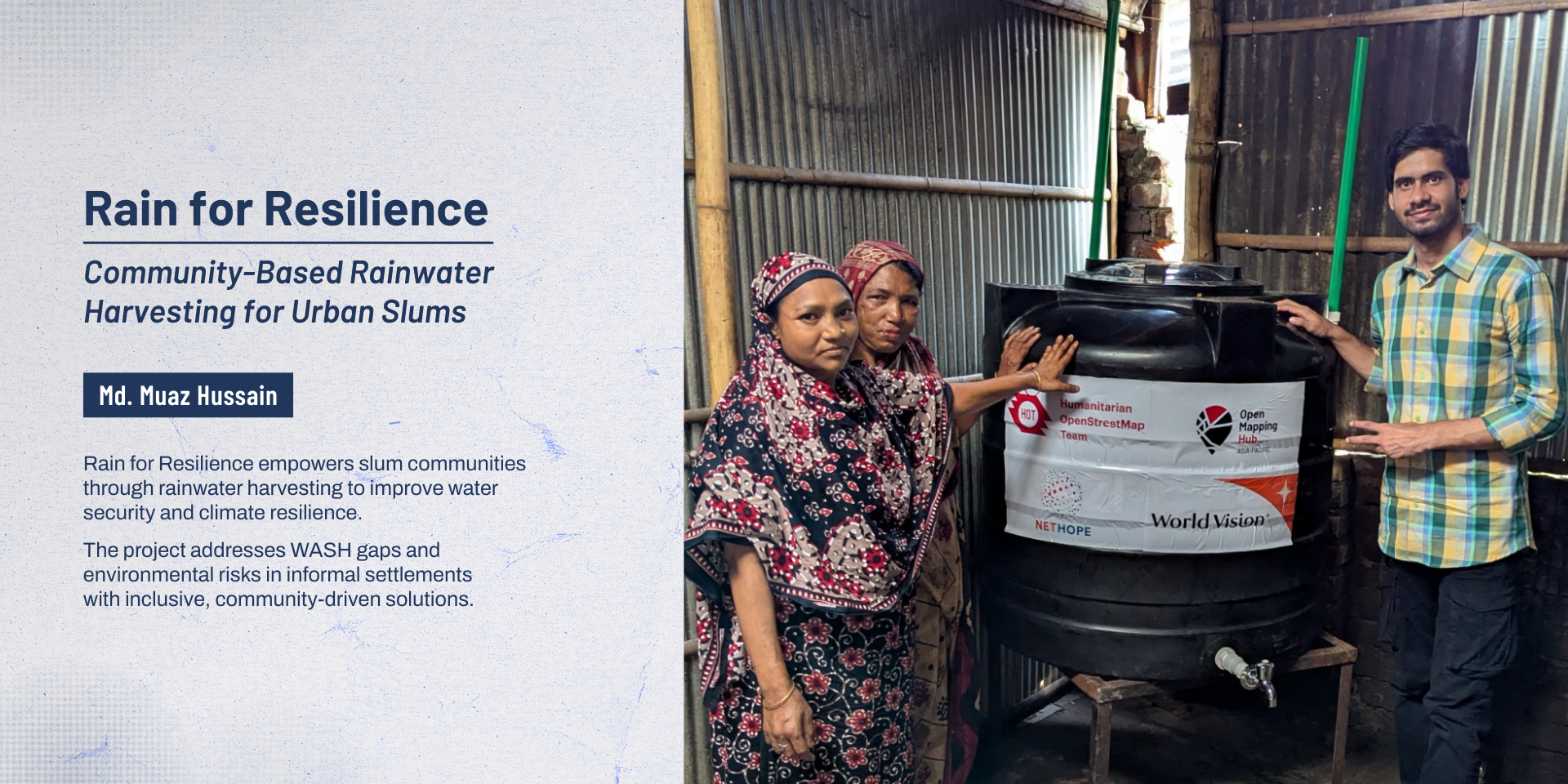
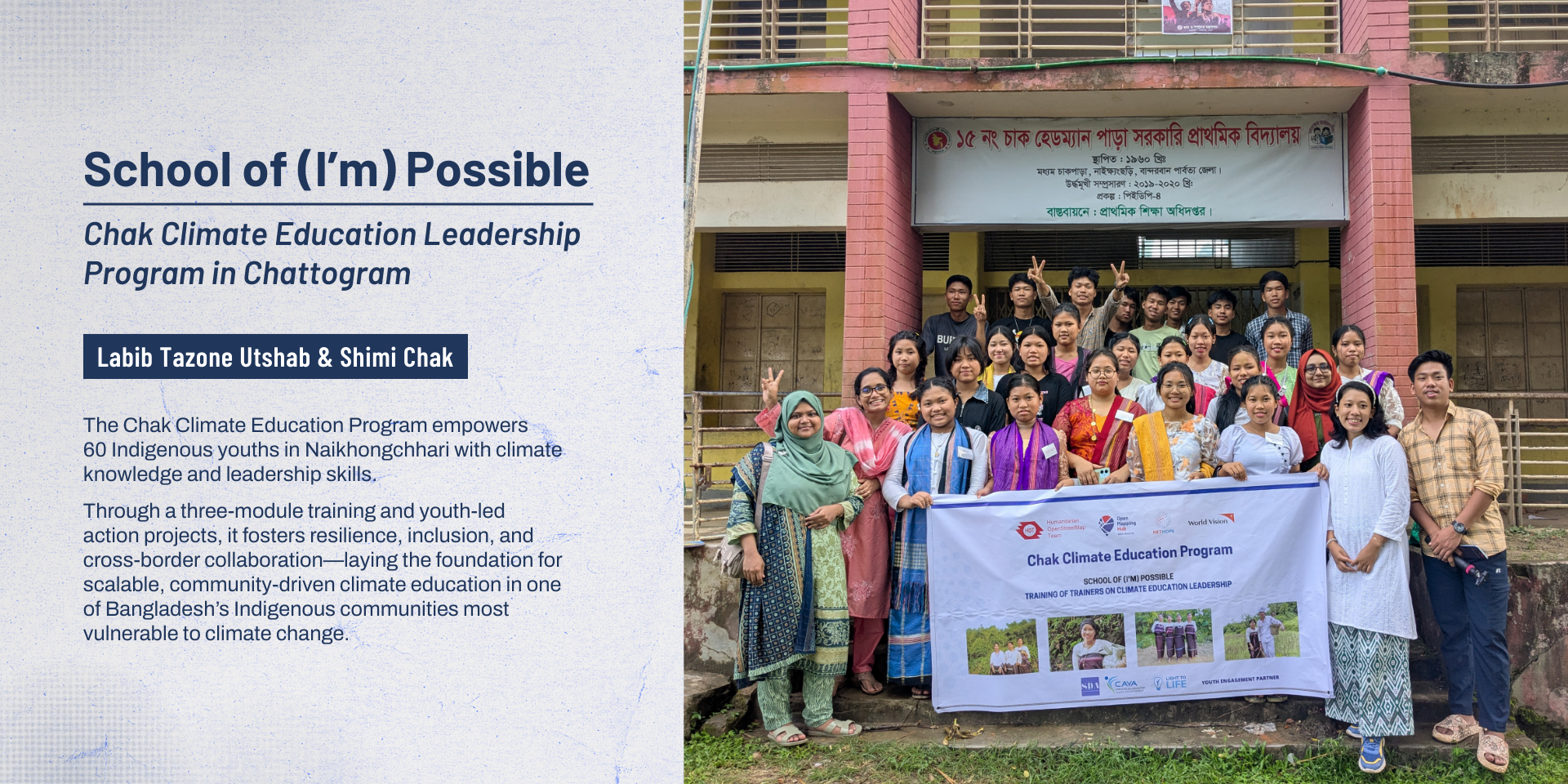
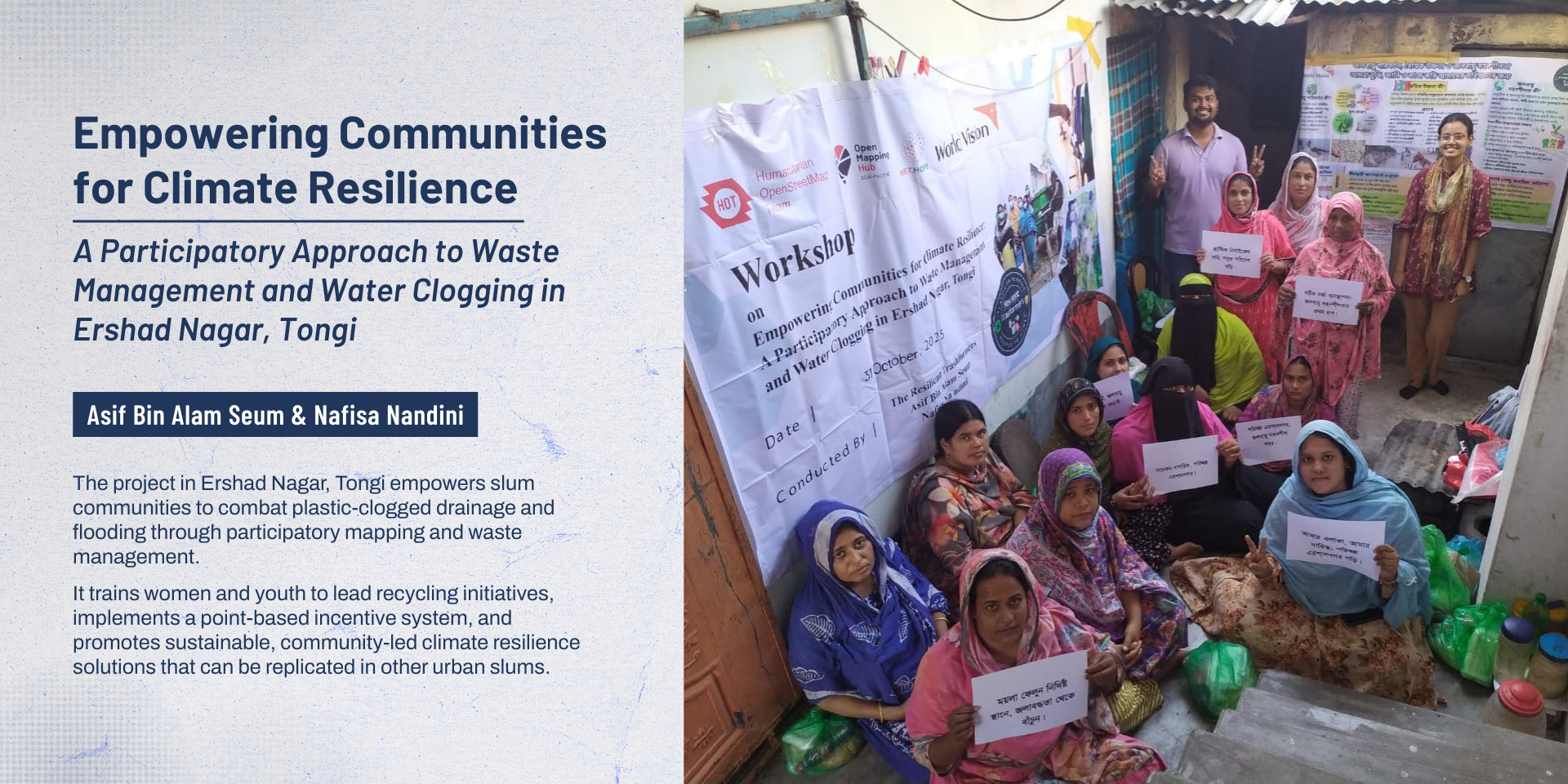
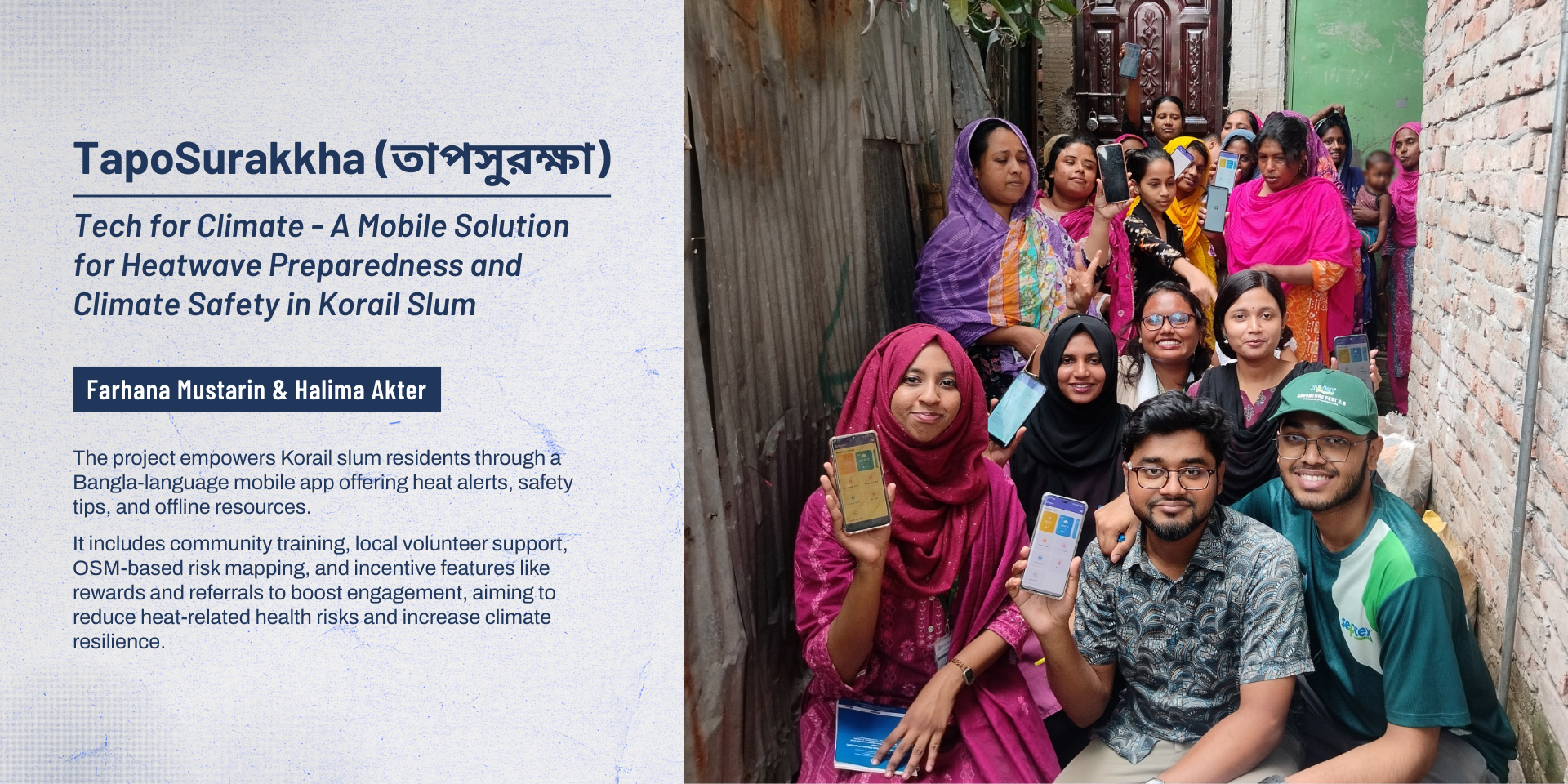
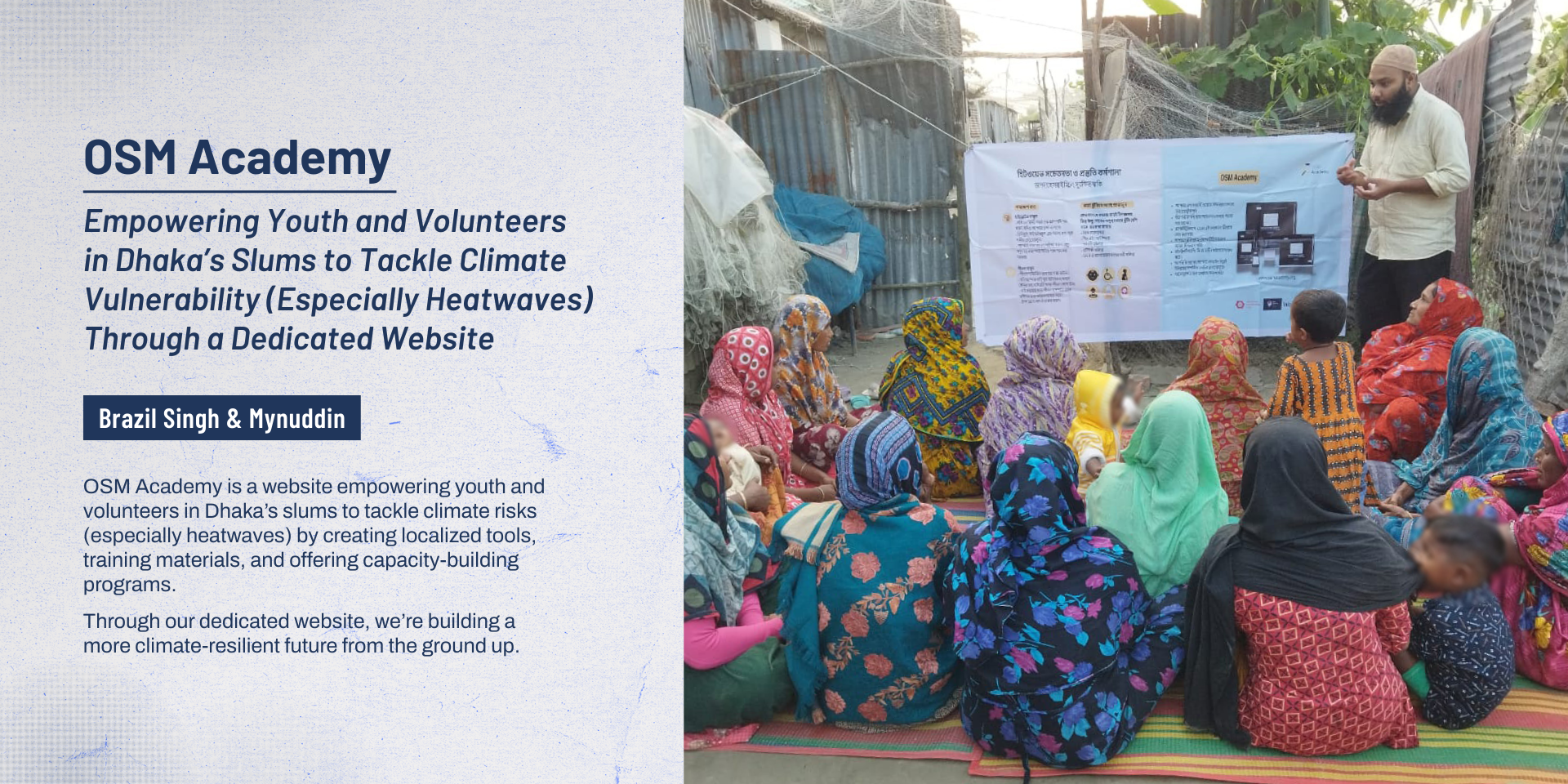
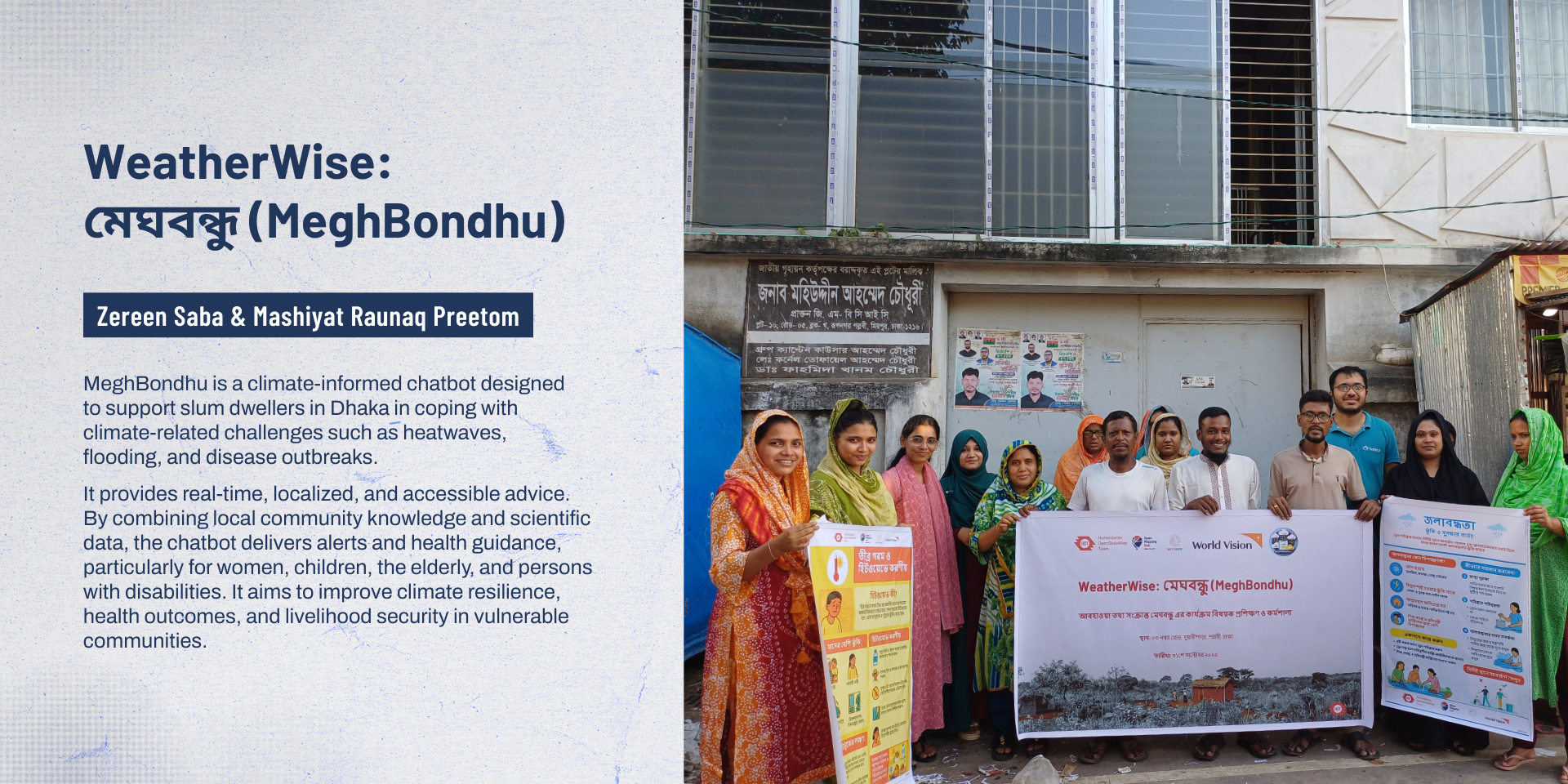
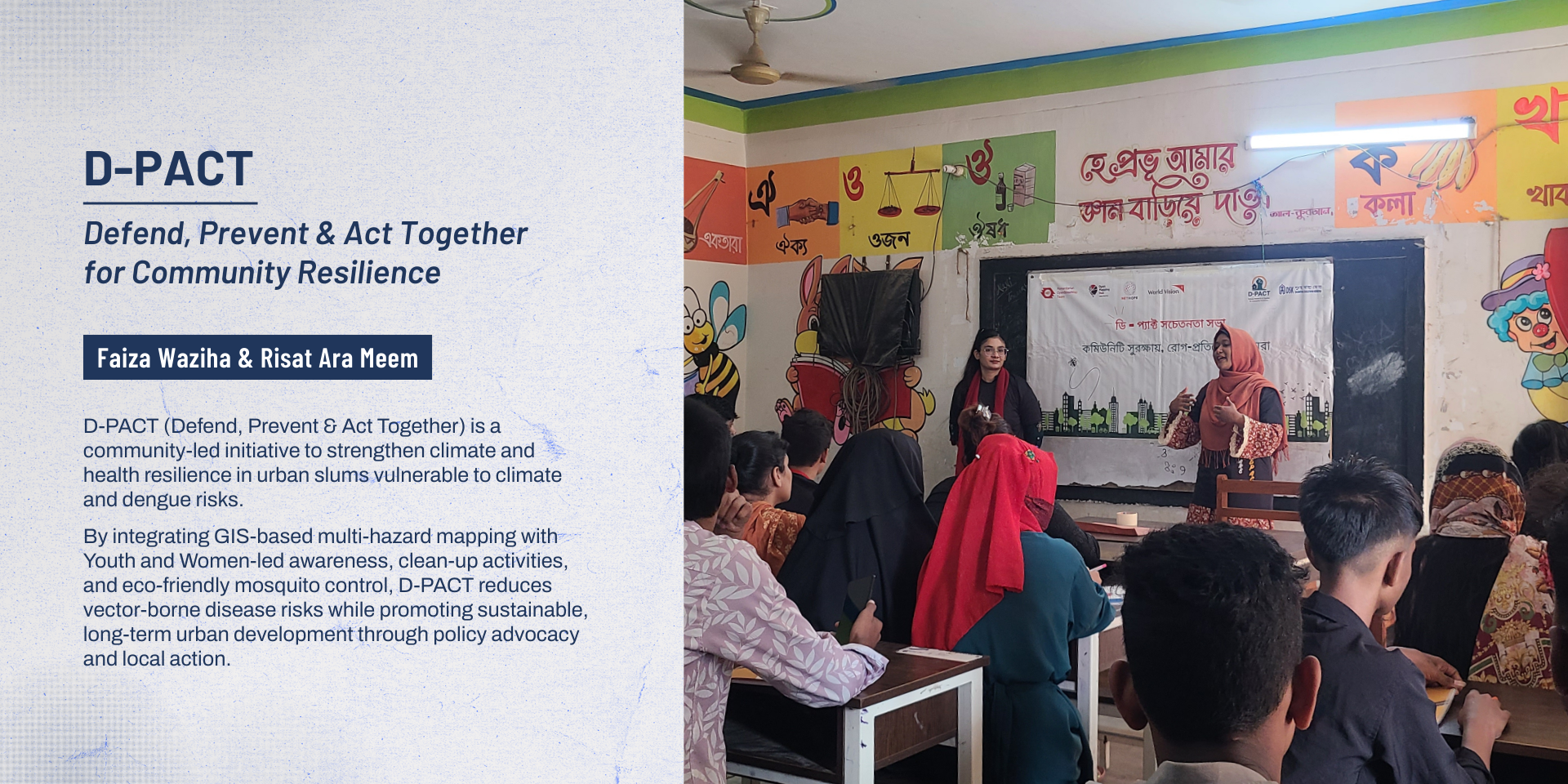
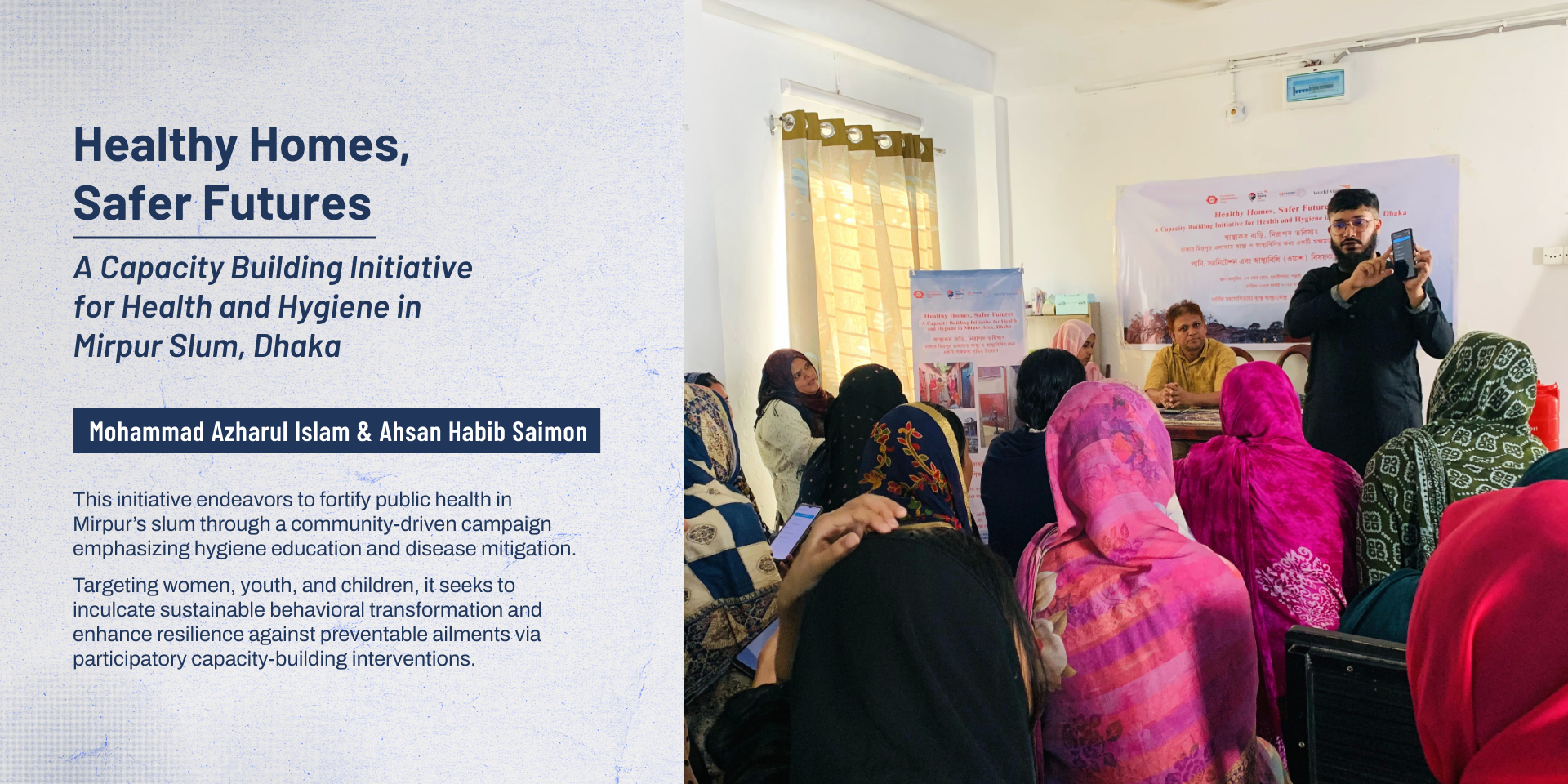
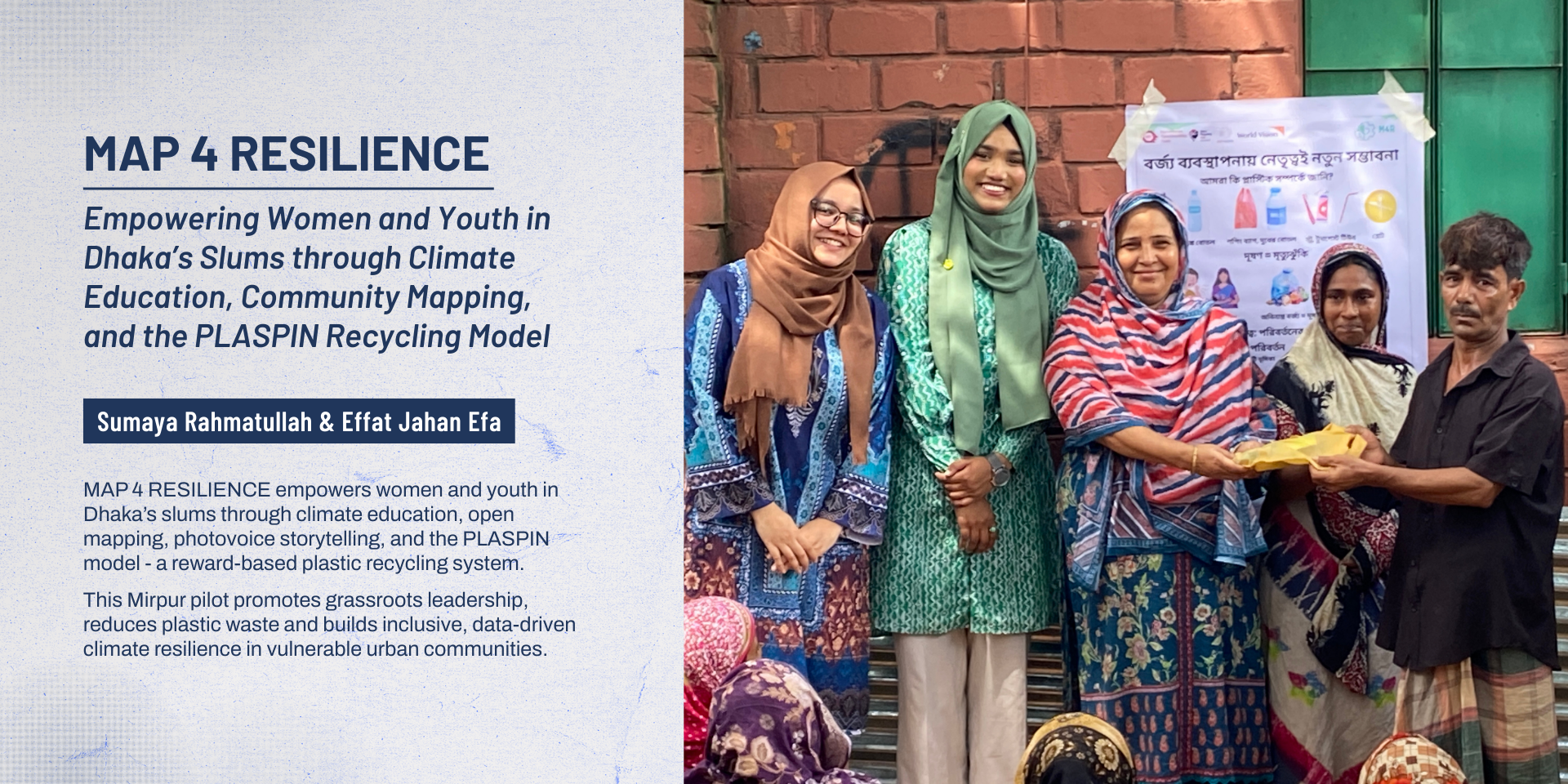
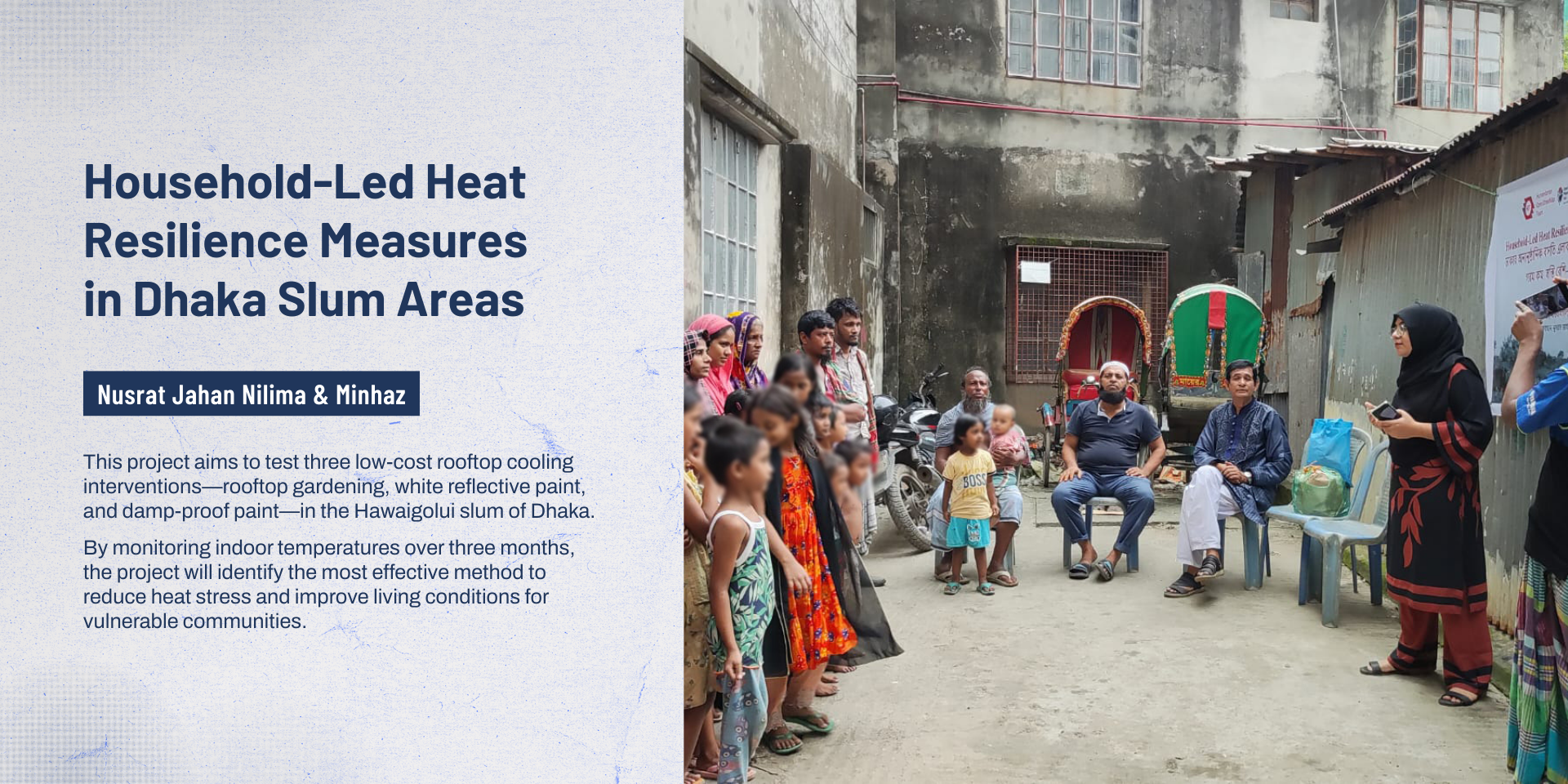
Fellows’ capstone projects. Slide through to learn more about each project. | Photo: Climate Resilience Fellows
Each fellow group led a capstone project that addressed a specific climate risk or capacity gap. The projects covered diverse themes, including waste management, rainwater harvesting, heat adaptation, digital technology, climate education, and community awareness.
Designed to be realistic, replicable, and community-owned, the projects engaged local communities in informal settlements to foster and build their own resilience.
The Fellowship Phases
- Capacity Building – Fellows participated in core learning sessions on open mapping, climate action, community engagement, and project development.
- Project Planning & Mentorship – Fellows designed their capstone proposals, refined them through feedback from mentors and technical staff, and aligned their work with community needs and feasibility. This phase concluded with the Culmination Week.
- Capstone Implementation – Fellows implemented their projects with seed funding, regular check-ins, and community engagements over three months.
- Pitching Session – Fellows presented their projects to a panel of funders, community leaders, and innovation experts. This event aims to propel promising projects forward through:
- Strategic feedback on scalability and sustainability
- Networking opportunities for future partnerships or funding
- Recognition and visibility for grassroots innovation in climate resilience
- Support to help projects sustain and grow
By the end of the fellowship, fellows will have strengthened their skills and confidence in leveraging open mapping for climate action, while also have implemented pilot projects that shed light on local vulnerabilities and solutions.
Additionally, they will inspire other youths and future generations to become changemakers in climate resilience and open mapping.
Stay updated on the latest news from our fellows’ capstone projects through our social media channels.
Cover photo credit: MAP 4 RESILIENCE
